.webp)
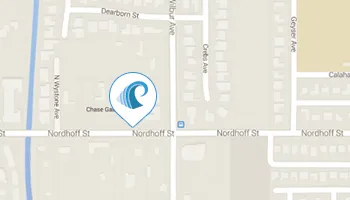
NORTHRIDGE
18907 Nordhoff St., #42
Northridge, CA 91324
Ph: 818-349-4956
Email: frontofficepairortho@gmail.com
CALABASAS
23622 Calabasas Road, #101
Calabasas, CA 91302
Ph: 818-222-4543
Email: smiles@calabasastoothfairy.com

NORTHRIDGE
18907 Nordhoff St., #42
Northridge, CA 91324
Ph: 818-349-4956
Email: frontofficepairortho@gmail.com
CALABASAS
23622 Calabasas Road, #101
Calabasas, CA 91302
Ph: 818-222-4543
Email: smiles@calabasastoothfairy.com
We Can’t Wait To Meet You And Welcome You To Our Office!
We're so glad you've chosen Pair Orthodontics for your smile journey. Our team, led by board-certified orthodontists Dr. Jason Pair and Dr. Michael Hoang, is dedicated to making your first visit and every visit after feel comfortable, welcoming, and easy. Whether you're bringing in a child for an early evaluation or exploring treatment options for yourself, we offer the latest technology, including the Damon System and Invisalign, tailored to your unique needs and goals. From scheduling your complimentary consultation to understanding what to expect at your first appointment, we can't wait to meet you and help you achieve the healthy, beautiful smile you deserve.
Our team is committed to making your treatment as easy and enjoyable as possible, in a friendly and welcoming environment. During your first visit, you’ll get acquainted with the process and procedures for braces; we’ll discuss your customized treatment options in detail, probable treatment length, and associated costs. The initial consultation is free.
If treatment is indicated, we’ll begin by taking diagnostic pictures, x-rays of your teeth, bite registrations, and impressions. These diagnostics will be referenced throughout your treatment and used to monitor progress.
It is usually difficult for you to determine if treatment is necessary because there are many problems that can occur even though the front teeth look straight. Also, there are some problems that look intimidating and complex which will resolve on their own. Asking your general dentist is good reference, but we are your best resource since orthodontics is all we do. Our initial exam is complimentary and we would be more than happy to see your child and make any recommendations necessary.
Although determining if treatment is necessary is difficult for you to assess, the following symptoms may help in prompting you to seek our orthodontic advice.
Ask your child to open their mouth, and let you look at their teeth. If you see any signs of crooked teeth, gaps between your child’s teeth or overlapping teeth, your child may need orthodontic treatment.
Ask your child to bite all the way down, but keeping their lips open so you can see their teeth. Do the front top teeth line up with the bottom? Do the top teeth protrude out away from the bottom teeth? Do the top front teeth cover more than 50% of the bottom teeth? Are the top teeth behind the bottom teeth? All these are indicators for potential orthodontic treatment.
Look at the alignment of your child’s jaw. Does the jaw shift off center when your child bites down? If you see any misalignment or shifting of the jaw, your child may have a skeletal problem, which requires early orthodontic intervention.
These are only some of the obvious symptoms of orthodontic problems.
The American Association of Orthodontists recommends that your child be evaluated by age 7. Early detection of some orthodontic problems is important in order to take early corrective action and avoid more difficult treatment later.
No, age is not a factor, only the health of your gums and bone which support your teeth. About 25% of our orthodontic patients are adults and that number is still growing!
Orthodontic treatment has improved dramatically. As a rule, braces make your teeth sore for a few days, but it is not painful. This annoyance can be relieved with an over-the-counter pain reliever. Today’s braces are smaller, more comfortable and use technology that reduces the discomfort. We use the latest in miniature braces and the highest quality of orthodontic materials in order to reduce discomfort and treatment time.
Yes. When teeth are missing, adjacent teeth will drift into the empty space. This will cause a functional, esthetic or periodontal problem. Orthodontic treatment will correct and prevent these problems and will also provide proper alignment for your dentist to replace the missing teeth.
Braces may be on between 6 and 30 months, or longer depending on the age of the patient, the severity of the problem, the patient’s cooperation, and the degree of movement possible.
When orthodontic treatment is implemented at the proper time, treatment is often less costly than the dental care required to treat the more serious problems that can develop years later.
Orthodontic fees have not increased as fast as many other consumer products. Financing is usually available and our office offers many payment programs that will meet your needs. In addition, many insurance plans now include orthodontics.
Yes, you can make payments through our online portal if you are a patient in our Northridge office. *A +3% surcharge will be added if using a credit card
Appliance: A device that assists in the straightening of teeth. Examples are braces, Invisalign, and retainers.
Archwire: The wire that extends through each bracket slot in braces.
Band: A metal device that wraps around the tooth to hold a bracket or tube in place.
Bonding: The technique of attaching an orthodontic device directly to the enamel of the tooth with the use of adhesive.
Bracket: The metal device (also referred to as a brace) for fastening the archwire to the tooth or band.
Coil Spring: A spring that fits between the bracket and the archwire to open space between teeth.
Elastic: A small rubber band that attaches to the braces to exert force on teeth to facilitate movement.
Elastic Tie: A small rubber band that encircles the bracket to seat the archwire in the bracket slot.
MARA Appliance: A device that corrects overbite by holding the lower jaw in a protrusive position.
Hook: A small device to which elastics or other auxiliary devices are attached.
Invisalign: A type of treatment that uses a series of clear plastic aligners, similar to clear retainers, to gradually move teeth.
Ligature: A wire used to tie a tooth to an orthodontic appliance or another tooth.
Mouth Guard: A tooth or gum shield worn by patients (athletes) to prevent injuries.
Palatal Expander: A device used to widen the upper jaw so that the upper and lower teeth will fit together.
Retainer: A device, usually made of plastic and wires, to hold teeth in position after treatment.
Separator: A device or instrument designed to wedge teeth apart, particularly teeth in tight contact. Frequently used for the examination of proximal surfaces, finishing a restoration or before banding.
Wax: A soft, malleable substance placed on brackets to prevent rubbing or irritation.
NORTHRIDGE
18907 Nordhoff St., #42
Northridge, CA 91324
Ph: 818-349-4956
Email: frontofficepairortho@gmail.com
CALABASAS
23622 Calabasas Road, #101
Calabasas, CA 91302
Ph: 818-222-4543
Email: smiles@calabasastoothfairy.com
© Pair & Hoang Orthodontics. 2026 All Rights Reserved | Statement of Accessibility | Online Payment